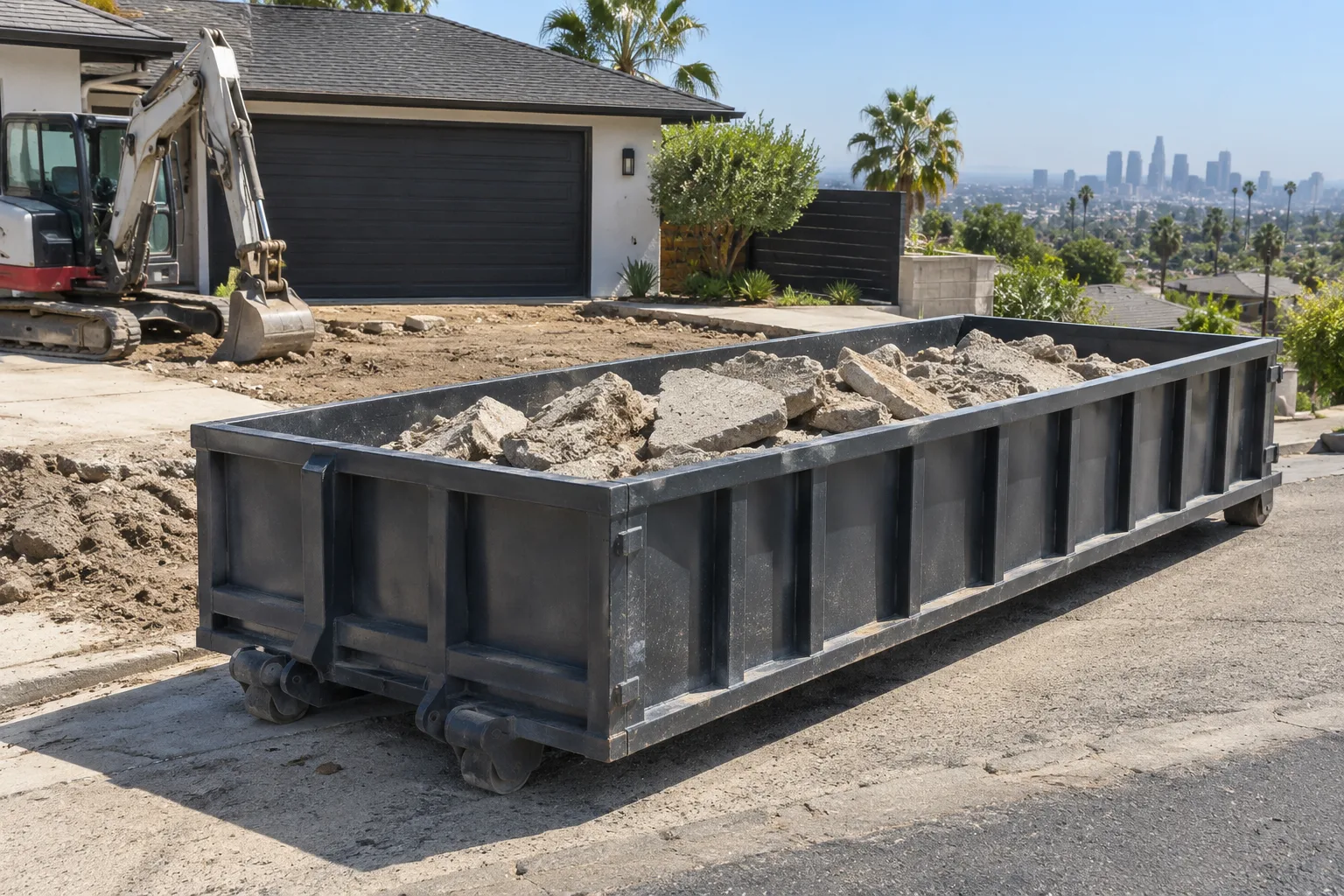
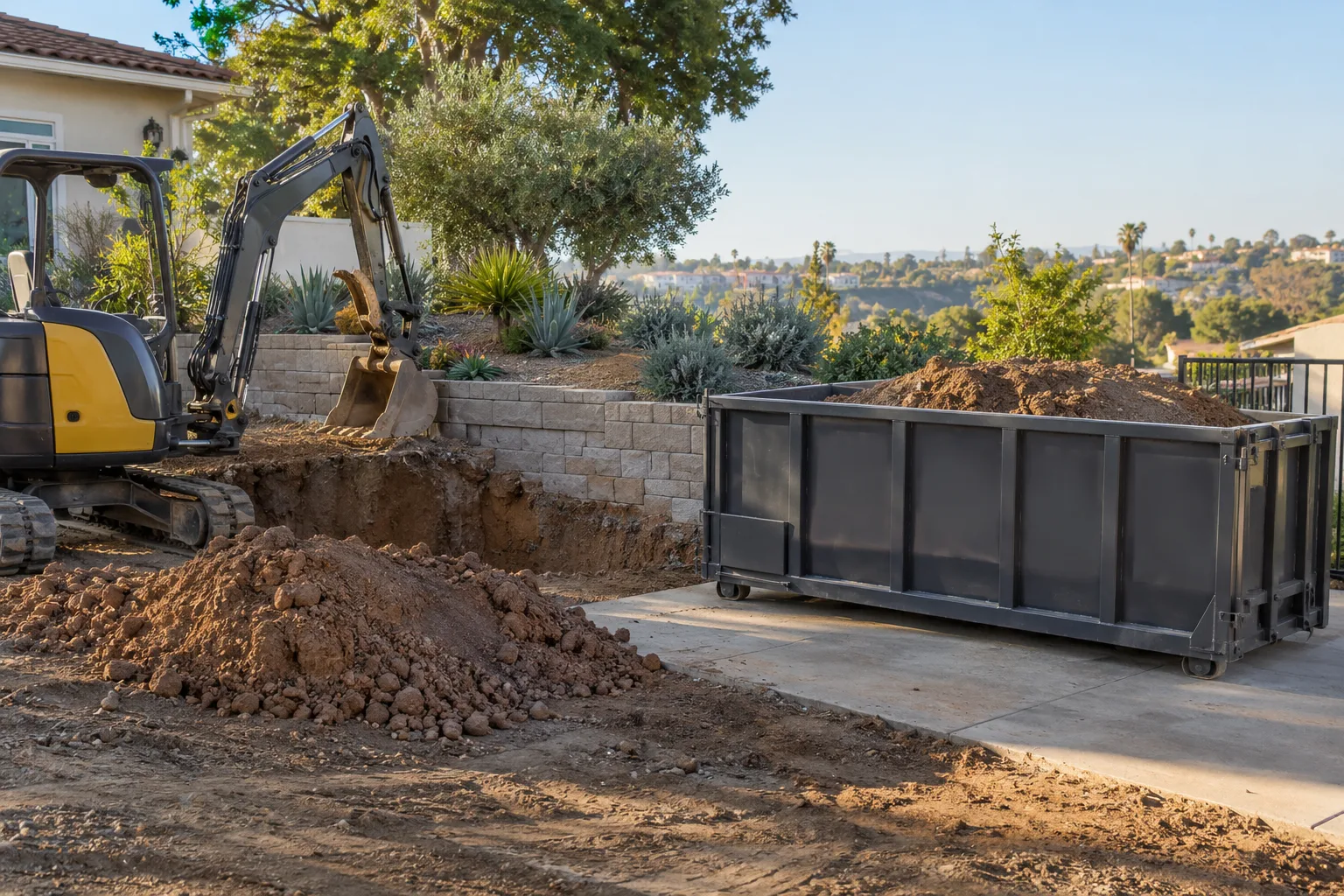
Keep heavy material separate
Concrete, dirt, brick, block, asphalt, and mixed demolition debris are not interchangeable. A provider may require clean, separated material and a low-profile container. Tell them whether concrete contains rebar and whether soil may be contaminated.
- Name the exact heavy material
- Estimate volume using measured length, width, and depth
- Separate trash, wood, roots, and other contamination
- Load evenly and keep the material below the required line
Plan for concentrated weight
Heavy loads place more demand on the surface and pickup equipment. Discuss pavement condition, slope, underground structures, access width, and any surface protection before the container is placed.
Weight drives the conversation
Material density, container type, load volume, address, and disposal or recycling route may affect the estimate. Never assume a general-purpose container can accept a full load of dirt or concrete.
Heavy-material questions
Only with explicit provider approval. Clean separated loads may have different handling routes.
Follow the provider’s specific loading line. Heavy loads are commonly limited well below the top.
Describe it before loading. Coatings, contamination, and embedded material may change acceptance.