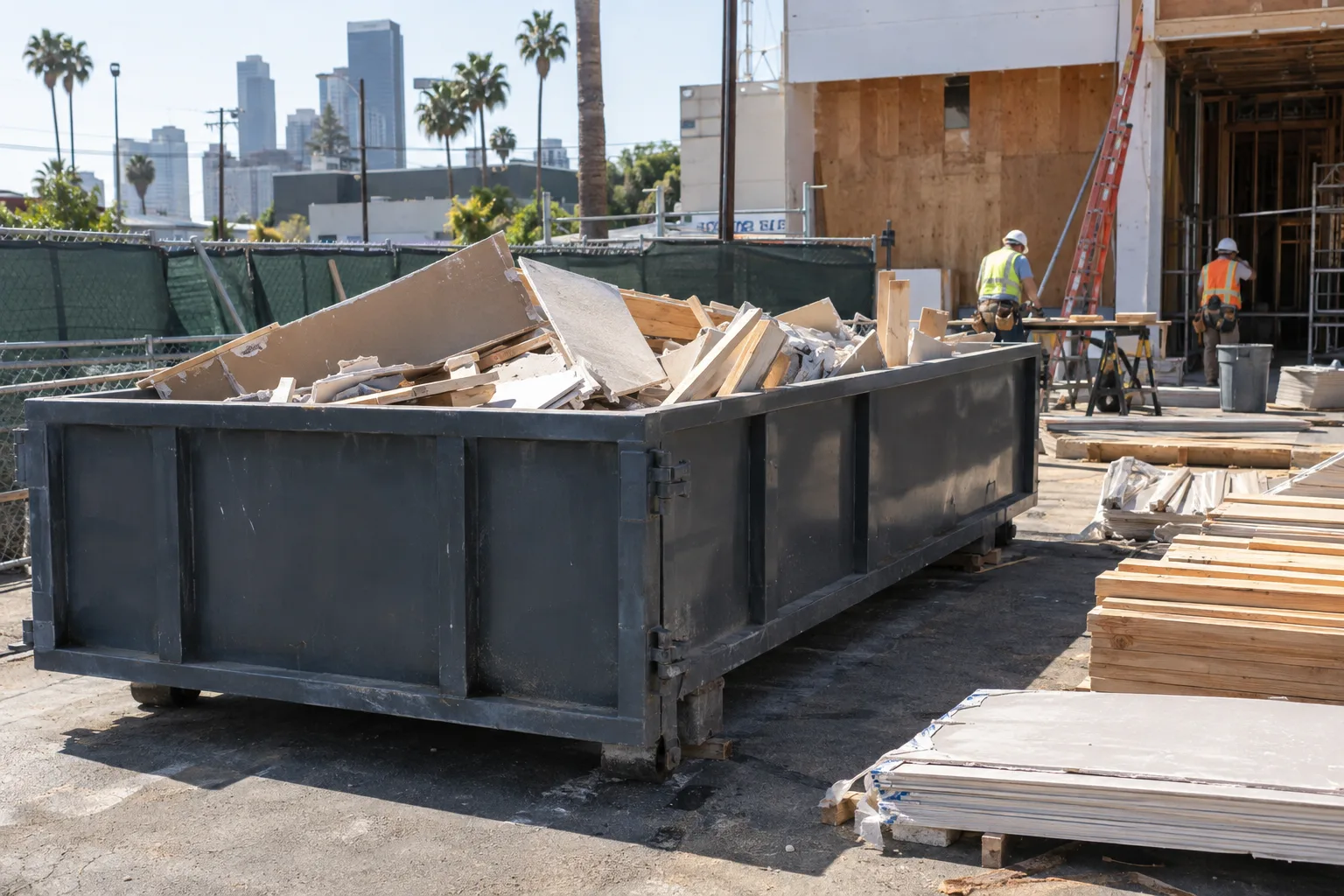
Inside the City of Los Angeles, LASAN says mixed construction and demolition waste must be hauled by permitted haulers to City-certified processing facilities. That makes the hauling route part of project planning, not an afterthought.
Confirm the responsible jurisdiction
First confirm whether the address is inside Los Angeles city limits or another incorporated city. Rules can differ across municipal boundaries. For permitted work, ask the project professional and responsible city which diversion, hauler, processor, and record requirements apply.
Match containers to the work sequence
| Phase | Likely material | Planning question |
|---|---|---|
| Selective demolition | Cabinetry, drywall, fixtures | Can reusable items be removed first? |
| Structural or site work | Wood, concrete, soil, masonry | Which dense materials need separate loads? |
| Finish work | Packaging, trim, flooring offcuts | Can clean cardboard or metal be separated? |
Keep the loading area controlled
Use one site contact to monitor the fill line, stop prohibited material, and request pickup before the container blocks the next phase. Keep the route separate from pedestrian circulation and coordinate gates, other deliveries, and temporary controls.
Keep the records the project requires
Save written service terms, weight tickets, receipts, and processor information when the jurisdiction or project requires them. California’s CALGreen framework includes debris-recovery requirements for many locally permitted construction, demolition, addition, and alteration projects; the responsible jurisdiction implements and enforces the current rules.
- Confirm city and permit context
- Verify the hauler and processor requirements
- List material streams by project phase
- Assign loading and pickup responsibility
- Save required diversion records
Review construction dumpster rental planning before calling.