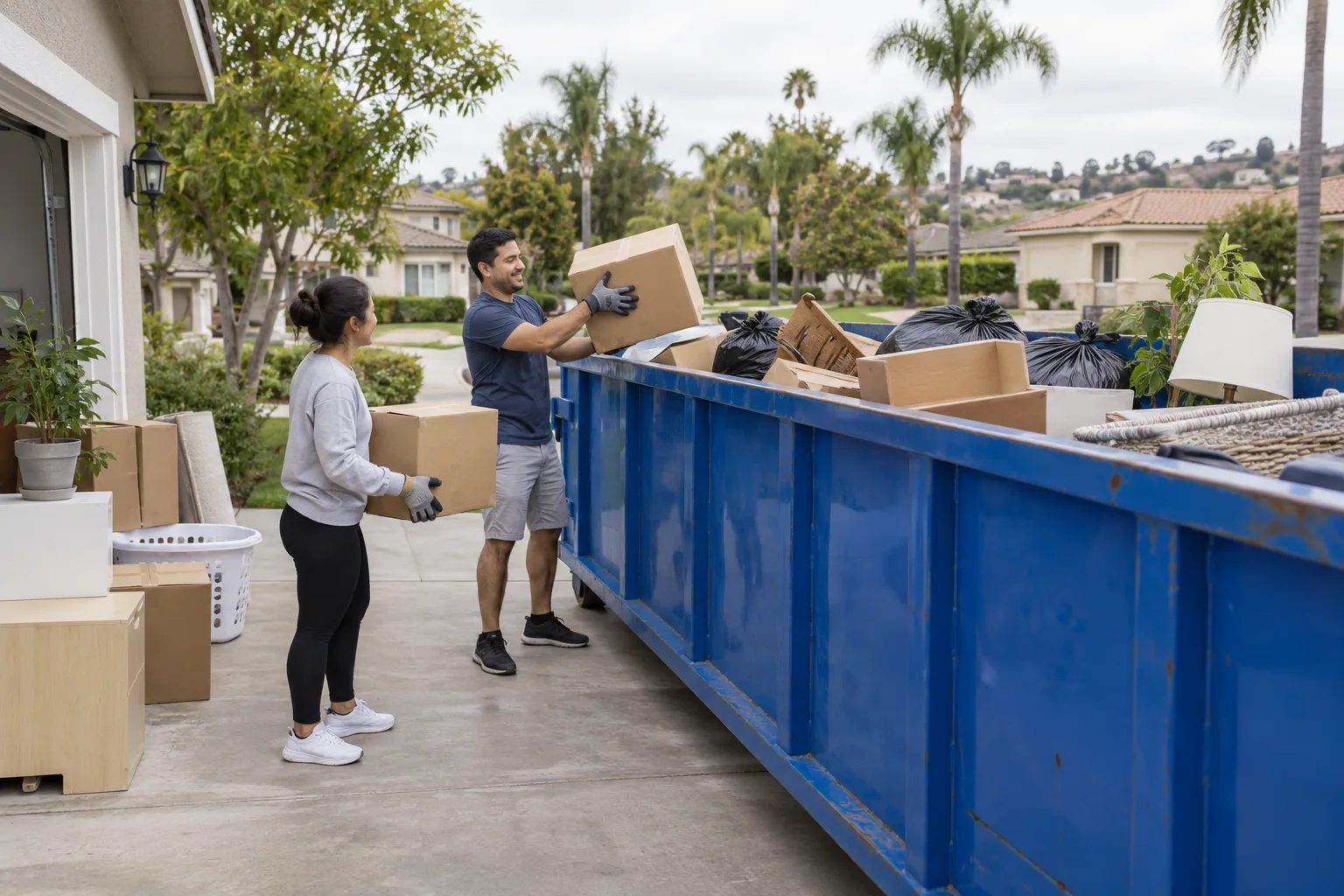
The quickest useful answer is to group the cleanup by material and room, then describe the largest items and the number of loaded trips you would otherwise make. The provider can compare that description with the containers it actually has available.
Sort before you size
Make four groups: material that stays, reusable or donatable items, ordinary nonhazardous debris, and restricted material that needs another disposal route. Los Angeles S.A.F.E. Centers accept household hazardous waste and electronic waste; paint, batteries, chemicals, and electronics should not be treated as ordinary dumpster material.
Use a room-and-item inventory
| Project area | Write down | Why it helps |
|---|---|---|
| Garage | Shelving, boxes, tools, bulky equipment | Shows whether the load is mostly collapsible or bulky |
| Kitchen | Cabinets, counters, flooring, fixtures | Separates renovation debris from household clutter |
| Yard | Branches, soil, fencing, furniture | Flags heavy or material-specific loads |
Do not rely on a “truckload” comparison unless the provider defines it. Ask for the container’s inside dimensions, volume, and weight terms.
Size is also a placement question
A container that holds the material still needs a safe approach and retrieval path. Measure the driveway and gate, look up for wires and branches, and discuss the surface condition. Keep delivery equipment away from people, pets, and parked cars.
Residential call checklist
- Project address and city
- Rooms or areas being cleared
- Largest and heaviest materials
- Restricted items kept out of the load
- Driveway or street placement preference
- Narrowest access measurement
- Desired delivery and pickup timing
Continue with the residential dumpster rental guide or prepare an estimate call.